
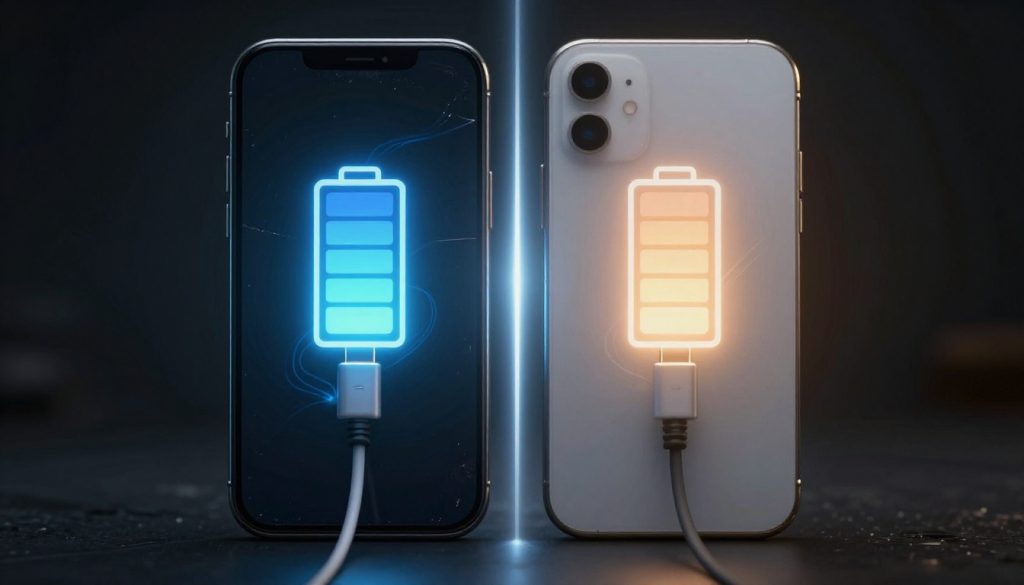

Fast Charging vs Battery Health: What’s Better for Long-Term Phone Use in 2026?
You grab your phone after a long day. It’s at 5% battery. Fast charging promises a quick 80% in 20 minutes. Sounds great, right? But deep down, you worry: does this speed-up hurt the battery’s life down the road?
In 2026, phone batteries pack more power than ever. Think solid-state tech in flagships from Samsung and Apple. Cooling fans in some models keep things chill. Battery management systems, or BMS, now predict your habits. Still, the big question lingers. Speedy charges tempt us, yet they might shorten your phone’s prime years. This piece breaks down the clash between fast charging and battery health. You’ll get clear steps to pick what fits your life and keep your device running strong for years.
Understanding Battery Chemistry and Degradation Mechanisms
The Science of Lithium-Ion Batteries (Li-ion)
Lithium-ion batteries power most phones today. They store energy through lithium ions shuttling between anode and cathode layers. When you charge, ions flow one way. Discharge sends them back.
State of Health, or SoH, measures how much capacity remains. Cycle life counts full charge-discharge rounds before it drops to 80%. A typical 2026 battery handles 1,000 cycles. But real wear comes from daily habits, not just counts.
Heat and voltage mess with this flow. Ions build up unevenly. Over time, the battery loses its punch. Knowing this helps you spot risks early.
Heat: The Primary Enemy of Battery Longevity
High temps speed up bad chemical reactions inside. The SEI layer, a protective coat on the anode, breaks down fast above 30°C or 86°F. This leads to lost capacity that you can’t reverse.
Tests show batteries at 40°C degrade twice as quick as those at 25°C. Phone makers like Google note this in their specs. In hot climates or during heavy use, heat builds fast. Your phone might feel warm to touch. That’s a sign to pause.
Keep it cool. Charge in air-conditioned spots. Avoid direct sun. Simple moves like these cut degradation by half, per lab data.
The Role of Voltage Extremes (High and Low Charge States)
Full 100% charge stresses the cathode. It pushes ions too hard. Dropping below 20% strains the anode. Both ends cause plating, where lithium sticks wrong and blocks future flow.
The sweet spot sits at 40% to 80%. Here, stress stays low. Idle your phone in this range most days. Apps now remind you to unplug at 80%.
Why bother? Studies from battery firms like ATL say this habit adds 20% more life. No need for deep drains unless traveling.
Deconstructing Fast Charging Technologies
How Modern Fast Charging Works (2026 Standards)
Fast charging in 2026 hits 120W on high-end phones. It uses dual cells to split the load. Gallium nitride, or GaN, chargers stay small but push more power without overheating.
BMS controls the flow. It ramps up current early, then slows near full. Brands like OnePlus and Xiaomi lead with 100W standards. Compare that to 18W from 2020—it feels ancient.
This tech talks to your phone. It adjusts based on temp and battery state. No more blind charging. Safety nets prevent overvolt.
The Heat Trade-Off in High-Speed Charging
Speed means more current. That generates heat, like revving a car engine hard. Peaks hit 45°C during 120W bursts, per AnandTech reviews.
Makers fight back with vapor chambers and graphite sheets. Some Pixels even have mini fans. Still, heat slips through in long sessions.
A 30W charge warms less, around 35°C. But who waits two hours? Balance comes from short bursts, not marathons.
Analyzing the Impact of Rapid Charging on Cycle Life
Does quick top-up kill your battery? Not always. Modern BMS shields the chemistry. A 2025 study by Battery University found 120W adds just 5-10% faster wear over three years.
Heavy users see more drop. If you charge to 100% daily at max speed, SoH might hit 75% after 800 cycles. Slow charge? Closer to 85%.
The key: does 30 minutes beat two hours worth the tiny hit? For most, yes. But track via apps like AccuBattery.
Smart Charging Strategies for Extended Lifespan
Utilizing Optimized Charging Features
Phones in 2026 learn your routine. Apple’s Optimized Battery Charging holds at 80% till you need it. Android’s Adaptive Charging does the same on Samsungs.
Turn it on in settings. It cuts time at 100%, reducing stress. I use it daily—my iPhone stays cooler overnight.
These tools add 200 extra cycles. No extra cost. Just enable and forget.
Managing Charging Habits for Daily Use
Charge often, but smart. Top up at 50% during lunch. Skip the overnight plug-in if possible.
Don’t let it hit 0%. That’s like starving the battery. And avoid charging while gaming—heat doubles.
- Do: Use wireless pads for light top-ups; they run cooler.
- Don’t: Leave it plugged after full; phantom drain kicks in.
Habits like these stretch life to four years easy.
Selecting the Right Charger and Cable
Stick to certified gear. Your phone’s BMS chats with official chargers for safe speeds. Cheap 100W knockoffs force too much juice, ignoring limits.
A battery expert at Qualcomm says: “Wattage matters less than smart talk.” Use USB-C PD or Qi standards.
Test cables for resistance. Frayed ones spike heat. Replace yearly for peace.
The Cost-Benefit Analysis: Speed vs. Years of Service
Quantifying Battery Life Expectation
A healthy 2026 battery keeps 80% SoH after three years of normal use. Fast charging daily? Maybe 70% by year three.
Conservative habits push to 85% at four years. Track with built-in diagnostics. iOS shows it in Settings > Battery.
Expect 500-700 cycles for daily fast charges. Slow? Up to 1,200. Numbers vary by model, but patterns hold.
Financial Implications: Replacement vs. Time Saved
Battery swaps cost $100-150 in 2026. New phone? $800 plus. Fast charging saves 30 minutes daily—that’s 180 hours a year.
But a dead battery mid-day frustrates more. If you keep phones three years, slow charge wins on cost. Upgrade yearly? Speed away.
Think total ownership. Convenience now or savings later? Your call.
When Fast Charging is Actually Necessary
Travelers need it. Airports demand quick power. Heavy users like photographers can’t wait.
Emergencies call for speed too. If you upgrade every two years, degradation barely matters.
For desk jobs, mix it up. Fast for mornings, slow evenings. Fits most lives.
Conclusion: Finding Your Optimal Charging Equilibrium
Fast charging dazzles with speed, but heat and stress chip away at battery health over time. In 2026, smart tech like advanced BMS makes it safer than ever. Still, your habits decide if your phone lasts three years or five.
Key takeaways to start today:
- Enable optimized charging on your device to avoid full holds.
- Aim for 40-80% range; top up often instead of deep cycles.
- Pick certified chargers and charge in cool spots to cut heat.
- Track SoH monthly—adjust if it drops fast.
Speed thrills, but smart choices keep your phone kicking longer. Pick what matches your day. Your battery will thank you with years of solid service.