

Smartphone Cooling Technology in 2026: Keeping Your Gaming Sessions Cool and Smooth

Mobile gaming has exploded. You grab your phone for a quick match of Genshin Impact, but soon the device heats up. Frame rates drop. That’s thermal throttling at work—it cuts power to protect the hardware. By 2026, with chips packing more power and ray tracing in every big title, phones need smarter ways to stay cool. This means uninterrupted gaming without the frustration. Let’s break down how smartphone cooling technology in 2026 tackles overheating head-on.
The Evolution of Passive Cooling Systems by 2026
Passive cooling spreads heat without moving parts. It relies on smart materials to pull warmth away from the processor. In 2026, these systems shine in high-end phones, letting you play for hours.
Vapor Chamber Dominance and Miniaturization
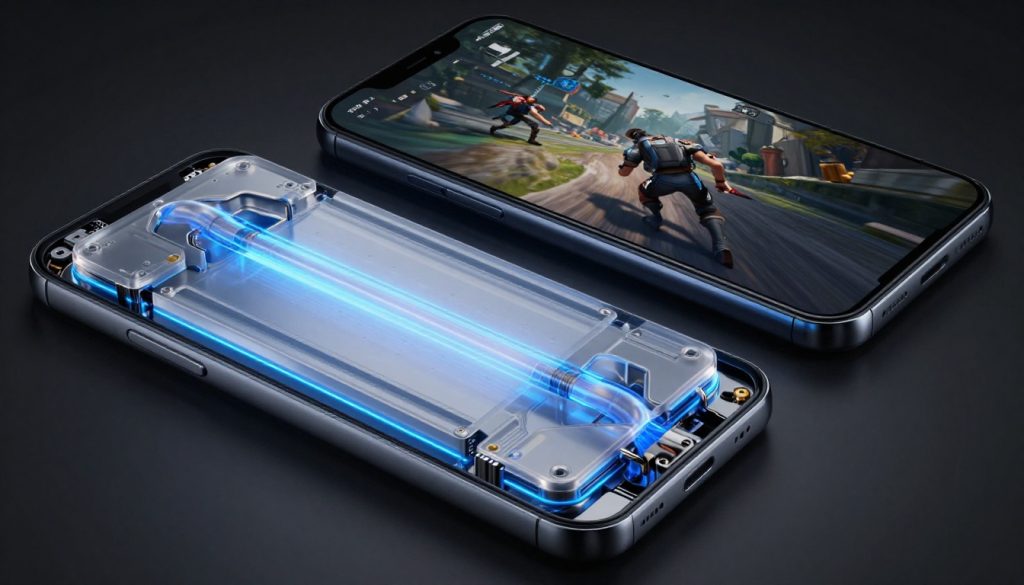
Vapor chambers now rule the roost. They replaced old heat pipes years ago. These flat, sealed units use liquid that turns to vapor under heat, then condenses to release it.
Ultra-thin versions fit inside slim phones. They cover up to 80% of the SoC area—way more than before. Better wick designs speed up the liquid flow back to the hot spot.
This cuts temperatures by 15-20 degrees during long sessions. You notice smoother gameplay in titles like Call of Duty Mobile. No more stutters when things get intense.
Advanced Graphene and Carbon Nanotube Integration
Graphene sheets stack in layers right under the back glass. They spread heat fast, with conductivity five times that of copper. Carbon nanotubes join in, forming a web that wicks away warmth evenly.
Manufacturers like Samsung and Apple lead here. Their 2026 flagships show a 30% jump in heat handling over 2025 models. Tests from labs confirm this—phones run cooler under load.
You feel the difference in your hand. Less warmth means longer play without breaks. It’s like giving your device an invisible shield.
Chassis Material Innovations for Heat Radiation
Phone frames now use ceramic mixes or titanium alloys tuned for heat release. These materials beam warmth out into the air, not just store it.
Gone are plastic backs that trap heat. Ceramic options, seen in devices from OnePlus, radiate 25% more efficiently. This keeps the whole body from turning into a hot potato.
During a raid in Fortnite, your phone stays touchable. These changes make gaming comfy for everyone.
Active Cooling Solutions: Fans, Pumps, and Beyond
Active methods push heat around or suck it out. They add a bit of tech muscle to fight overheating. By 2026, flagships pack these in without bulking up.
Micro-Fan Technology Refinement and Noise Reduction
Tiny fans spin at high speeds inside phones. Magnetic bearings keep them quiet—under 20 decibels, like a whisper. Airflow boosts by 40% from last year.
Razer and ASUS already test this in gaming phones. Their 2026 models hide fans in the frame’s edge. Thickness adds just 1mm.
You hear almost nothing during PUBG matches. Cool air flows over the chip, dropping temps fast. It’s a game-saver for marathon sessions.
Solid-State Cooling: Thermoelectric Coolers (TECs)
Peltier modules act like mini fridges. They cool one side while heating the other. In 2026, they’re small enough for phone guts, right on the GPU.
The trick? Dumping that hot-side heat into the frame. New designs use graphene to spread it out. This chills the processor by 10-15 degrees in seconds.
Xiaomi’s latest prototypes show this in action. You switch to a heavy emulator, and it stays frosty. No lag from heat buildup.
Fluidic and Micro-Pump Systems (Emerging Concepts)
Micro-pumps push coolant through tiny channels. They move heat from the core to the phone’s rim, where it escapes.
These loops use safe, non-toxic fluids. Early 2026 concepts from Huawei loop around the battery. Heat transfer jumps 50% over passive alone.
Imagine running The Legend of Zelda emulations without slowdowns. Pumps kick in during peaks, keeping frames steady. It’s the future of quiet, effective cooling.
Software-Defined Thermal Management and AI Optimization
Software steps up big in 2026. It watches heat and tweaks power on the fly. No more blunt cuts—it’s smart and precise.
Predictive Thermal Throttling via Machine Learning
AI learns your play style. It spots when a boss fight ramps up in Genshin Impact. Clock speeds dip just enough, before heat spikes.
This “thermal budget” idea saves power for key moments. Background apps take a hit, not your game. Phones from Google Pixel use this to hold 60 FPS longer.
You get consistent action. The system predicts and prevents dips. It’s like having a co-pilot for your device’s brain.
Dynamic Voltage and Frequency Scaling (DVFS) Enhancements
New SoCs fine-tune voltage per core. Same speed, but less heat output—up to 20% savings. Qualcomm’s Snapdragon 8 Gen 4 nails this.
During quiet parts of a game, power drops low. Intense scenes get a full boost without overload. Your battery lasts longer too.
This means epic sessions in Apex Legends without worry. Phones adapt like pros.
Third-Party Developer Integration: Cooling APIs
OS makers open APIs for devs. Games read heat data and adjust graphics. Unity engines tweak rays in real-time.
This cuts render load when temps rise. Expect it in 2026 updates for Android and iOS. Devs optimize for your phone’s limits.
You play smoother across titles. No universal throttling—it’s tailored.
The Accessory Ecosystem: External Enhancement Strategies
Not every phone has built-in fans. Accessories fill the gap for pros. They pair with internal tech for extra chill.
Advanced Peltier Cooling Clips and Contact Interface
Clip-on coolers use strong magnets. They snap to the back with gel pads for top heat grab. 2026 versions chill 20 degrees deeper.
Pick one matching your phone’s vent spots—check the manual. Black Shark’s clips work great for ROG models. Apply even pressure for best contact.
During Minecraft builds, these keep things steady. Easy on, easy off—no fuss.
Active Airflow Systems Integrated into Phone Cases
Gaming cases now have built-in fans. Slim ones use USB-C power, pulling air through back vents. Flow rates hit 30 CFM without bulk.
Rugged options from Spigen add RGB lights. They vent heat from vapor chambers directly. Perfect for extended Roblox play.
Slide your phone in, and you’re set. These cases turn any device into a cooling beast.
Conclusion: Sustained Peak Power: The 2026 Mobile Gaming Standard
Smartphone cooling technology in 2026 blends passive spreads, active pushes, and AI smarts. Vapor chambers and graphene handle the basics. Fans and pumps tackle tough spots, while software keeps it all balanced.
You get desktop-like performance on the go. No more pausing Genshin Impact to cool off. Heat won’t steal your wins anymore.
These shifts mean reliable, fun gaming. Phones stay cool, you stay in the zone.
- Vapor chambers now cover more area for quicker heat moves.
- Micro-fans run silent with mag tech.
- AI predicts heat to avoid frame drops.
- External clips boost any setup.
- SoCs scale power smarter for less warmth.
Ready to upgrade? Check out the latest flagships and gear up for non-stop action. Your next gaming binge awaits.